Case Studies
Exploring the principles of creative, entrepreneurial, and business-driven projects



Indomie
24/04/2026

School Sampling Strategy
Indomie adopted an experiential marketing approach by distributing product samples directly in schools to introduce children to the brand at an early stage. Instead of relying solely on traditional advertising, the brand created a hands-on experience that allowed its target audience to taste and engage with the product firsthand.
This approach generated immediate product trial, as students were able to experience the noodles directly during school activities. The excitement that followed among children helped reinforce positive brand perception and made the product memorable.
More importantly, the campaign created organic demand beyond the school environment. Many children began requesting Indomie at home, influencing household purchasing decisions through their enthusiasm and preference. This made children not just consumers, but active brand advocates within their families.
Through this strategy, Indomie effectively built strong brand familiarity and deep household penetration by engaging directly with its future consumers. The campaign demonstrates how experiential marketing, when targeted at the right audience, can translate early product exposure into long-term brand loyalty and market growth.
Vision
24/04/2026

🚀 Vision Is Not Always Individual
Being visionary does not always mean having a personal vision that stands alone. In many cases, true vision lies in the ability to recognize the strength of other people’s ideas and align with them. No one is meant to be an island, especially in creative, entrepreneurial, and business-driven projects. Execution, refinement, and even long-term impact often depend on collaboration.
Some of the most successful projects in history were not built on a single mind, but on shared thinking and complementary strengths. A strong idea in the hands of one person may remain limited, but when placed in the right partnership, it becomes transformative.
This shifts the perspective on vision: instead of constantly searching for a completely personal idea, it becomes equally important to listen, observe, and identify value in the visions of others—whether in conversations, notes, or shared workspaces. Sometimes the breakthrough you are looking for already exists in the thoughts of a colleague, friend, or collaborator.
A major example of this is the partnership between Steve Jobs and Steve Wozniak. Jobs brought vision, positioning, and design thinking, while Wozniak provided deep technical engineering brilliance. Alone, each had limitations; together, they built one of the most influential technology companies in the world. Their success was not rooted in isolated genius, but in the merging of complementary visions.
In this sense, vision becomes less about ownership and more about recognition—seeing value in others, aligning with it, and building something greater than what could be achieved alone.
• Introduced Custom Routine Rules so you can set flexible streaks and exceptions that match real life.
Apple
24/04/2026
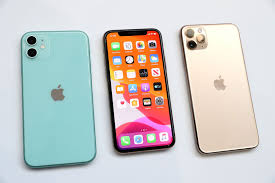
🚀 Apple’s “Push-Up Mechanism” in Product Evolution
Apple’s product strategy is often interpreted as a continuous “push-up mechanism” a system where each new release subtly encourages users to move up the product ladder. With every new iPhone iteration, Apple introduces improved performance, enhanced cameras, refined design, and tighter software integration. This creates a natural desire among users to upgrade, not through force, but through perceived value progression.
A key element of this system is software lifecycle management. Older devices gradually receive fewer feature updates and eventually stop supporting the latest iOS versions. While security updates may continue for some time, the experience gap between newer and older models becomes increasingly visible. This does not immediately render older devices unusable, but it does position them as less aligned with the “current Apple experience.”
From a market perspective, this creates a controlled flow within Apple’s ecosystem
New releases attract attention and set new standards
Mid-tier users are encouraged to upgrade over time
Older devices transition into secondary markets (refurbished and secondhand ecosystems)
This has led to a significant expansion of the used iPhone market, where older models remain valuable and widely circulated, particularly in emerging markets. In some cases, these devices become more accessible entry points into the Apple ecosystem than brand-new flagship models.
However, this strategy is not without broader industry influence. Many Android manufacturers have also adopted similar design philosophies—longer support cycles, premium design consistency, and iterative upgrades—to remain competitive with Apple’s ecosystem-driven model. This reflects a convergence toward “designed proximity,” where competitors align their product evolution pace with Apple’s incremental innovation strategy.
At its core, Apple’s approach demonstrates a deliberate balance between present usability and future positioning. Each product is designed not only for current performance but also to define the expectations of the next cycle. This creates a long-term ecosystem effect where today’s innovation becomes tomorrow’s baseline.
The strategic insight here is critical: large-scale product ecosystems do not rely on sudden leaps alone. They depend on structured, incremental progression that guides users forward while maintaining a continuous value ladder.
In this sense, Apple’s model shows that big visions are powerful but when combined with a designed system of controlled upgrades, software lifecycle management, and ecosystem alignment, they become scalable, predictable, and commercially sustainable over time.